
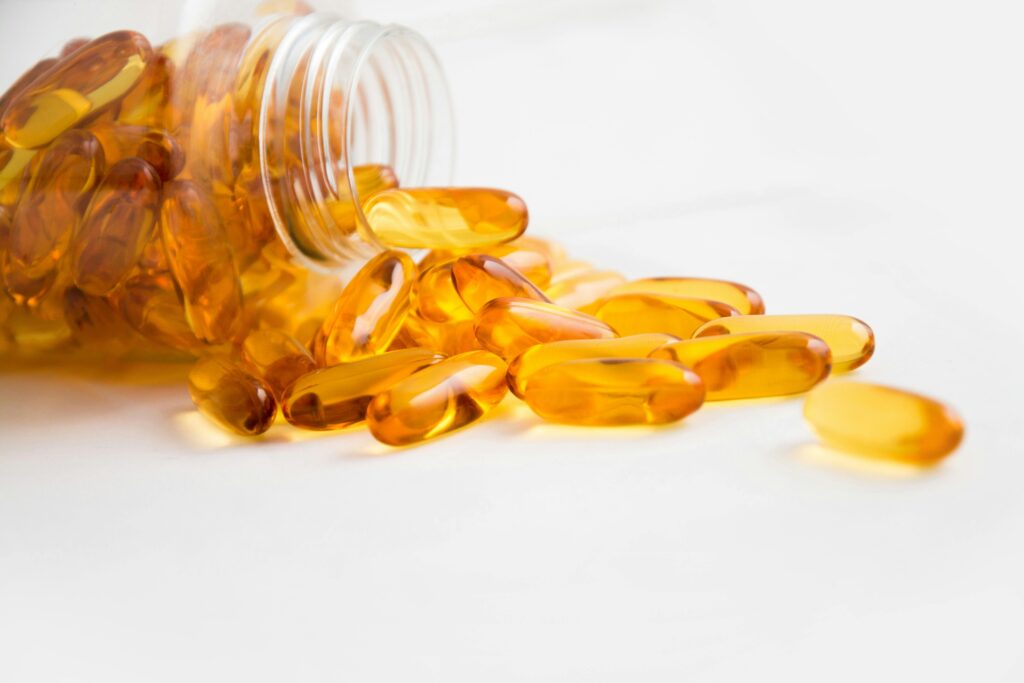
Women’s health needs change throughout life from energy demands in your 30s and 40s, to bone health and hormone balance in perimenopause and beyond. The right vitamins and minerals can fill nutritional gaps, support long-term wellness, and prevent common deficiencies. In this article, we’ll cover the 7 best vitamins for women, their benefits, natural food sources, and supplement tips.
1. Vitamin D
Why women need it: Vitamin D is one of the most important vitamins for women. It helps regulate calcium absorption, supports bone density, strengthens immunity, and even plays a role in mood and hormone balance. Deficiency is extremely common, especially in women with darker skin tones, those who spend most of their time indoors, or who live in northern climates.
Normal lab values:
Optimal range (25-hydroxyvitamin D blood test): 40–60 ng/mL
Insufficient: 20–29 ng/mL
Deficient: <20 ng/mL
Toxicity risk: >100 ng/mL
Signs of deficiency:
Fatigue and low energy
Frequent colds or infections
Low mood or seasonal depression
Bone pain, muscle weakness, or cramps
Hair loss and brittle nails
Food sources: Fatty fish (salmon, mackerel, sardines), fortified milk, mushrooms exposed to UV light, and egg yolks.
Supplement tip:
Most women benefit from Vitamin D3 (cholecalciferol), which is more effective than D2.
Pairing vitamin D3 with Vitamin K2 helps direct calcium into bones and teeth instead of arteries.
Dosage: Many women need 1,000–2,000 IU daily, but if blood work shows deficiency, higher doses may be needed temporarily under medical supervision.
My go-to supplement brand: Pure Encapsulations D3 & K2 – easy to take, highly absorbable, and allows you to customize your dose (great for maintaining optimal levels).
2. Vitamin B12
Why women need it: Vitamin B12 is essential for healthy red blood cells, DNA synthesis, energy production, and brain health. Women are especially vulnerable to deficiency if they follow a vegetarian or vegan diet, have gut absorption issues (like IBS, celiac, or after bariatric surgery), or are over 40 (stomach acid declines with age, reducing absorption).
Normal lab values (serum B12):
- Optimal range: 500–900 pg/mL
- Borderline: 200–400 pg/mL (may still cause symptoms)
- Deficient: <200 pg/mL
(Note: Some functional medicine labs consider <450 pg/mL insufficient if symptoms are present.)
Signs of deficiency:
- Chronic fatigue and low stamina
- Numbness, tingling, or “pins and needles” in hands/feet
- Brain fog or memory issues
- Pale skin or brittle nails
- Hair thinning and slow growth
- Mood changes, anxiety, or depression
Food sources:
- Animal-based: Salmon, sardines, tuna, eggs, dairy, lean red meat
- Plant-based: Fortified plant milks, fortified cereals, nutritional yeast
Supplement tip:
- Form matters: Choose methylcobalamin or adenosylcobalamin, which are active forms the body can use immediately.
- Delivery method: Sublingual tablets, lozenges, or sprays often absorb better than capsules for women with gut absorption issues.
- Dosage: Maintenance is typically 500–1,000 mcg daily; deficiency may require higher, doctor-supervised doses or injections.
My go-to supplement brand:
- Thorne Methylcobalamin (B12) – a clean, active form in an easy-to-dissolve lozenge for better absorption.
3. Iron
Why women need it: Iron is crucial for oxygen transport, energy production, and hair growth. Women of reproductive age often lose significant amounts of iron through monthly periods. Low ferritin (iron storage) is one of the most common reasons women struggle with fatigue, hair thinning, and brittle nails.
Normal lab values:
- Ferritin (iron storage):
- Optimal for women: 50–150 ng/mL
- Low iron stores: <30 ng/mL
- Severe deficiency: <15 ng/mL
- Hemoglobin:
- Normal for women: 12–15 g/dL
- Iron saturation (TSAT):
- Normal: 20–40%
(Note: A woman can have “normal” hemoglobin but still be low in ferritin, which impacts energy, mood, and hair health.)
Signs of deficiency:
- Fatigue and weakness
- Shortness of breath with light activity
- Dizziness or lightheadedness
- Brittle nails and hair loss
- Pale skin or dark under-eye circles
- Restless legs, especially at night
- Cold hands and feet
Food sources:
- Heme iron (easily absorbed): Lean red meat, chicken liver, turkey, shellfish
- Non-heme iron: Spinach, lentils, black beans, pumpkin seeds, quinoa
- Pro tip: Pair plant-based iron with vitamin C (like lemon juice or bell peppers) to boost absorption. Avoid tea/coffee with iron-rich meals since tannins block absorption.

Supplement tip:
- Choose gentle, highly absorbable forms like iron bisglycinate or heme iron polypeptide, which cause less constipation and stomach upset compared to ferrous sulfate.
- Start low and go slow — many women do well with 25–36 mg daily, adjusting based on labs.
- Always recheck labs after 8–12 weeks of supplementation to avoid overload.
My go-to supplement brand:
- Thorne Iron Bisglycinate – gentle on the stomach and well-absorbed.
4. Calcium
Why women need it: Calcium is the most abundant mineral in the body, responsible for strong bones, healthy teeth, nerve signaling, and muscle function. Women are at higher risk of osteoporosis and bone fractures, especially after menopause when estrogen levels drop and bone loss accelerates. Even younger women often don’t meet daily calcium requirements through diet alone.
Normal lab values:
- Serum calcium: 8.6–10.4 mg/dL (but note: serum calcium isn’t the best marker for true calcium status since the body tightly regulates blood calcium)
- Bone density (DEXA scan): T-score above –1 is normal; –1 to –2.5 indicates osteopenia; below –2.5 indicates osteoporosis.
Signs of low calcium:
- Muscle cramps or spasms
- Tingling in lips, fingers, or toes
- Brittle nails and weak teeth
- Bone pain or frequent fractures
- PMS symptoms like bloating and irritability
Food sources:
- Dairy: Yogurt, milk, cheese
- Non-dairy: Kale, broccoli, bok choy, almonds, sesame seeds, fortified plant milks
- Pro tip: Vitamin D and magnesium help calcium absorption, while excessive caffeine and soda may deplete it.
Supplement tip:
- Form matters:
- Calcium citrate – best absorbed and gentler on the stomach, works even without food
- Calcium carbonate – higher dose per pill but requires stomach acid (take with meals)
- Dosage: Aim for 1,000 mg daily (ages 19–50) and 1,200 mg daily (ages 50+), preferably split into 500 mg or less per dose for better absorption.
- Always balance calcium with vitamin D + vitamin K2 + magnesium for bone health and to avoid calcification in arteries.
My go-to supplement brand:
- Thorne Calcium Citrate – highly absorbable, gentle on digestion, and easy to pair with vitamin D/K2.
5. Magnesium
Why women need it: Magnesium is involved in over 300 enzymatic reactions in the body, including energy production, hormone balance, blood sugar regulation, and muscle function. For women, it can reduce PMS symptoms, improve sleep quality, and ease perimenopausal stress. Despite its importance, most women fall short of their daily magnesium needs due to soil depletion and processed diets.
Normal lab values:
- Serum magnesium: 1.7–2.2 mg/dL (but this test can miss deficiencies since only ~1% of magnesium is in blood; many functional medicine practitioners prefer RBC magnesium testing)
- RBC magnesium (more accurate): Optimal range 5.0–6.5 mg/dL
Signs of magnesium deficiency:
- Trouble falling or staying asleep
- Anxiety, irritability, or low stress tolerance
- Muscle cramps, twitches, or restless legs
- Headaches or migraines
- PMS symptoms (bloating, mood swings, cravings)
- Constipation or sluggish digestion
- Fatigue despite good sleep
Food sources:
- Dark leafy greens (spinach, Swiss chard, kale)
- Nuts and seeds (pumpkin seeds, almonds, cashews)
- Legumes (black beans, lentils, chickpeas)
- Dark chocolate and avocados
Supplement tip:
- Forms matter:
- Magnesium glycinate – best for relaxation, anxiety, and sleep
- Magnesium citrate – helps with constipation and digestion
- Magnesium malate – supports energy and muscle recovery
- Dosage: Most women benefit from 200–400 mg daily, preferably taken in the evening for relaxation and sleep support.
My go-to supplement brand:
- Thorne Magnesium Bisglycinate Powder – easy to mix into water, gentle on the stomach, and excellent for improving sleep quality.
6. Omega-3 Fatty Acids
Why women need it: Omega-3s are essential fatty acids that the body cannot produce on its own. They support heart health, brain function, joint mobility, and hormonal balance. For women, omega-3s may also reduce menstrual cramps, ease perimenopausal inflammation, and support healthy pregnancy outcomes.
Key omega-3 types:
- EPA (eicosapentaenoic acid): Best for heart health and lowering inflammation
- DHA (docosahexaenoic acid): Crucial for brain, eyes, and pregnancy health
- ALA (alpha-linolenic acid): Found in plants, but must be converted into EPA/DHA (inefficiently)
Optimal blood levels (Omega-3 Index test):
- Optimal: 8–12% of total fatty acids
- Intermediate: 4–8%
- High risk: <4%
Signs of deficiency:
- Dry skin or brittle hair
- Poor concentration or memory issues (“brain fog”)
- Joint pain or stiffness
- Mood swings, anxiety, or depression
- Menstrual cramps or worsening PMS
- Slow wound healing
Food sources:
- Rich in EPA + DHA: Salmon, sardines, anchovies, herring, mackerel
- Plant-based ALA: Chia seeds, flaxseeds, hemp seeds, walnuts
- Pro tip: For those who don’t eat fish, algae oil is a direct vegan source of DHA.
Supplement tip:
- Look for a product with at least 1,000 mg combined EPA + DHA per serving.
- Triglyceride or re-esterified triglyceride forms absorb better than ethyl esters.
- Take with meals containing fat for maximum absorption.
My go-to supplement brand:
- Thorne Omega-3 w/ CoQ10 – combines high-quality fish oil (EPA + DHA) with CoQ10 for additional cardiovascular and cellular energy support.
7. Folate (Vitamin B9)
Why women need it: Folate is essential for DNA repair, red blood cell formation, and nervous system health. For women of childbearing age, it’s critical for preventing neural tube defects during pregnancy. Beyond fertility, folate supports heart health by lowering homocysteine levels and may reduce cognitive decline risk as women age.
Normal lab values:
- Serum folate: >3 ng/mL (deficiency = <2 ng/mL)
- Optimal functional range: >7 ng/mL
- Homocysteine (related marker): 4–8 µmol/L is considered optimal; >10 suggests folate, B12, or B6 deficiency.
Signs of deficiency:
- Fatigue and weakness
- Irritability or mood changes
- Brain fog and poor memory
- Mouth sores or tongue inflammation
- Hair loss or slow hair/nail growth
- Anemia (megaloblastic) with pale skin
Food sources:
- Dark leafy greens (spinach, kale, collard greens)
- Avocado, asparagus, Brussels sprouts
- Beans, lentils, and chickpeas
- Citrus fruits (oranges, grapefruit)
- Fortified cereals and breads
Supplement tip:
- Always choose methylfolate (5-MTHF) instead of folic acid. Many women have genetic variations (MTHFR mutation) that make it difficult to convert folic acid into its usable form.
- Pair folate with B12 for proper red blood cell and nervous system function.
- Dosage: 400–800 mcg daily for general health; higher amounts (up to 1 mg) may be recommended during preconception and pregnancy.
My go-to supplement brand:
- Thorne 5-MTHF (Folate) – bioactive form for maximum absorption, available in 1 mg capsules.
From vitamin D for bone strength to magnesium for better sleep, these nutrients can help women stay energized, balanced, and resilient at every stage of life. While whole foods are always the best foundation, supplements can be a powerful way to fill in the gaps.
Always consult your healthcare provider before starting new supplements especially if you’re pregnant, breastfeeding, or on medication.